How to Maximize Your AC Efficiency Before the Florida Heat Kicks In
Spring in Palm City feels pleasant right up until it doesn't. Temperatures climb fast in Martin County, and by the time most homeowners think about their AC, the system is already working overtime. Getting ahead of the heat now means lower energy bills, fewer repair calls, and a home that actually stays comfortable when it matters most.
Here are the most effective steps you can take to maximize your AC efficiency before Florida's summer heat arrives in full force.
Set Your Thermostat the Right Way
One of the simplest ways to reduce cooling costs in Florida is to stop fighting your thermostat. Setting it to 78 degrees when you are home and raising it a few degrees when you are away can make a meaningful difference on your monthly bill.
If you still have a manual thermostat, upgrading to a programmable or smart thermostat is worth the investment. Smart thermostats learn your schedule, adjust automatically, and prevent your system from running hard when the house is empty. In Florida's climate, where your AC runs nearly year-round, the savings add up quickly.
- Set your thermostat to 78 degrees when home, 82 to 85 when away
- Avoid dropping the temperature dramatically when you return home, it does not cool faster and strains the system
- Use a programmable or smart thermostat to automate your schedule
Seal Your Ductwork
Leaky ducts are one of the biggest hidden causes of high cooling costs in Florida homes. When conditioned air escapes into unconditioned spaces like your attic or walls, your system has to work harder to maintain the temperature you set. Studies suggest that leaky ducts can waste 20 to 30 percent of your cooling energy.
Signs of duct leakage include uneven temperatures between rooms, rooms that never seem to cool down, and energy bills that keep climbing without explanation. A professional duct inspection can identify problem areas and seal them properly, which improves both comfort and AC optimization throughout your home.
- Uneven room temperatures are a common sign of duct leaks
- Leaky ducts in attic spaces are especially problematic in Florida's heat
- Professional duct sealing is more effective and longer-lasting than DIY tape solutions
Check and Improve Your Insulation
Florida homes lose a significant amount of conditioned air through poorly insulated attics and walls. When your attic reaches 140 to 160 degrees in the summer, inadequate insulation lets that heat radiate directly into your living space, forcing your AC to compensate constantly.
The recommended insulation level for attics in our region is R-38 or higher. If your home is older or you have never had insulation assessed, now is a good time to have it checked. Proper insulation is one of the highest-return improvements you can make for energy-efficient AC performance in Florida.
Use Shading to Reduce Heat Gain
Direct sunlight through windows and onto your outdoor unit adds heat load that your AC has to overcome. Reducing that heat gain is a passive way to support your system without spending anything on energy.
- Install blackout or solar-blocking window shades on south and west-facing windows
- Use exterior awnings or shade screens to block sunlight before it enters the glass
- Plant trees or tall shrubs to shade your outdoor condenser unit, but keep at least two feet of clearance around it for airflow
- Close blinds and curtains during peak sun hours, typically between 11 a.m. and 4 p.m.
Shading your outdoor condenser unit alone can improve its efficiency by several percentage points, since the unit runs more effectively when it is not sitting in direct afternoon sun.
Clean and Maintain the System Regularly
Routine cleaning is the foundation of AC optimization, and it is often the most neglected step. A dirty air filter restricts airflow and forces your system to work harder, raising your energy bills and shortening the life of the equipment. In Florida, where systems run almost constantly, filters need to be changed every 30 to 60 days.
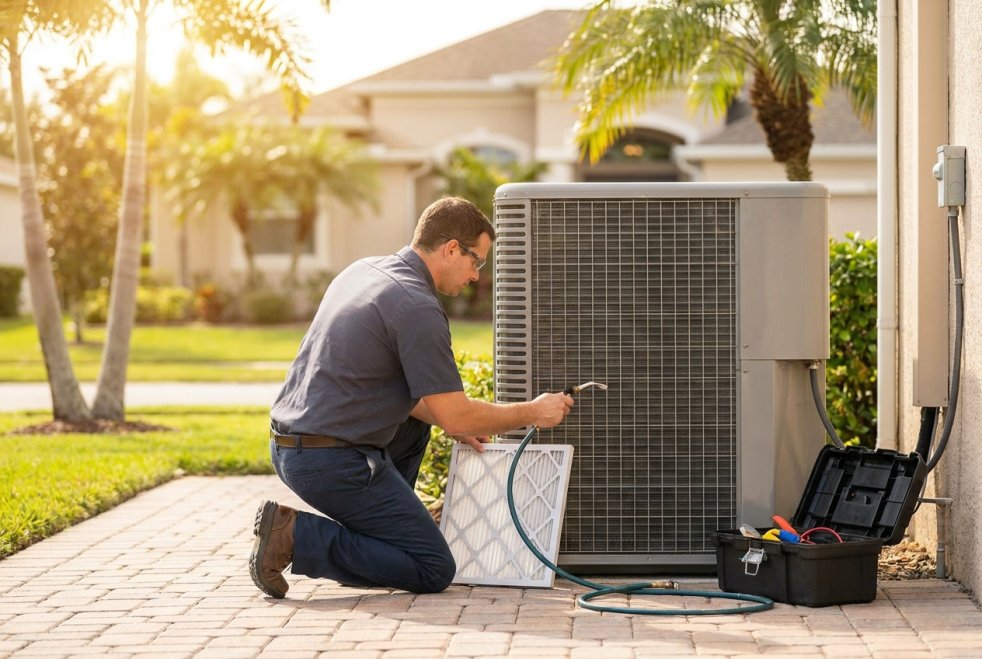
Beyond the filter, your evaporator coil, condenser coil, and condensate drain line all need periodic attention. Algae and mold grow quickly in Florida's humidity, and a clogged drain line is one of the most common causes of water damage and system shutdowns during peak season.
- Replace air filters every 30 to 60 days during the cooling season
- Flush the condensate drain line monthly with a diluted bleach solution
- Keep the area around your outdoor unit clear of debris, leaves, and overgrowth
- Schedule a professional tune-up before summer to clean coils, check refrigerant, and inspect electrical components
Schedule a Pre-Summer AC Tune-Up
All of the steps above are more effective when paired with a professional inspection. A seasonal tune-up catches small issues before they become expensive repairs and confirms that your system is running at peak efficiency heading into the hottest months of the year.
In Palm City and throughout Martin County, the summer cooling season is long and demanding. Getting your system serviced now means you are not scrambling for an emergency repair in July when every HVAC technician in the area is booked out.
A Plus Air Conditioning and Appliances Inc. serves Palm City and the surrounding Martin County area with honest, professional HVAC service. Whether you need a tune-up, duct sealing, or a full system assessment, our team is ready to help you get the most out of your cooling system before the heat arrives.
Call us today at (772) 444-8957 to schedule your pre-summer AC inspection and start saving on your cooling costs before Florida's heat kicks in.